The $126 Million Toner Call: Why Scammers Love Your Copier
Federal prosecutors say one toner scheme took more than $126 million from over 50,000 businesses and charities, and many of them already got toner free with their copier contracts. Here's the script, what the law says about the invoice, and the five-minute fix.
Key takeaways
- The "toner call" is one of the oldest cons in the office. Callers pose as your regular supplier, claim prices are going up, and get someone to sign an "order confirmation." Then come the overpriced toner and the collection threats.[1][2]
- The biggest known case: more than $126 million from over 50,000 victims over six years. That's roughly $2,520 per victim, by our math.[2] Prosecutors said many victims already got toner at no extra charge under their copier contracts.[1][2]
- Federal law lets you treat merchandise mailed to you that you never asked for as a gift, and the sender can't bill you for it.[9] That's exactly why the script pushes for a signature.
- The fix: one person approves all supply orders, nobody gives out copier details over the phone, and if toner comes with your lease, any toner invoice is a red flag.
The call that sounds like a favor
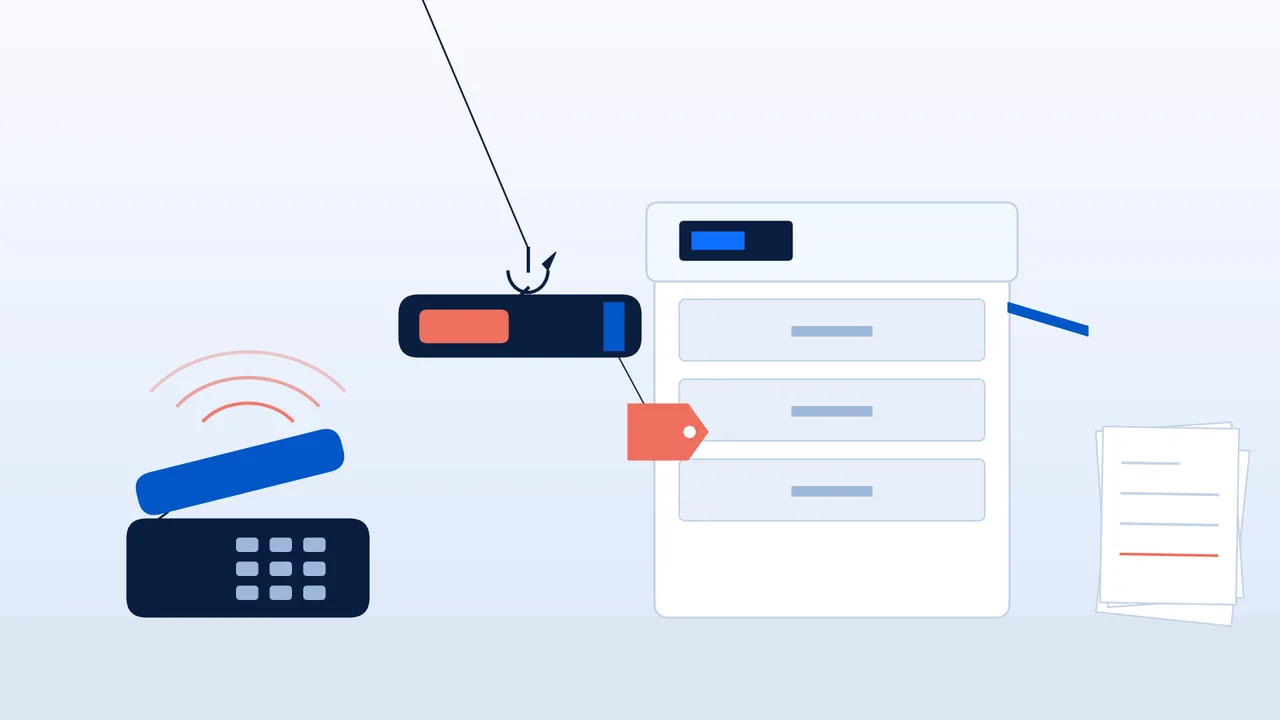
It usually goes like this. Someone calls the front desk, friendly and in a hurry. They're "with your copier supplier." Toner prices are going up, nobody told you, but they can still lock in the old price if you confirm today.
That's not our paraphrase of a vague rumor. It's the script federal prosecutors laid out in a 2016 indictment out of Santa Ana, California, just up the road from our Irvine office: telemarketers "claimed to be their regular supplier of toner," told employees the price "had increased and they had not been notified," and offered the "previous, lower price."[1] Employees signed order confirmation forms. Toner showed up. So did invoices at prices the indictment put at "two to ten times the regular cost of toner."[1]
When victims complained, they were told the order couldn't be canceled because they had signed. Some got threatened with collections or legal action. Those allowed to send toner back paid "restocking fees."[1]
A state attorney general's office has a name for it: the "toner phoner." Its guidance warns that an advance call is sometimes made just to find out what brand of equipment you use, so the second call sounds legit.[10]
The receipt: $126 million, 50,000 victims
By far the most significant business-to-business problem area.
Federal Trade Commission, on office and cleaning supply telemarketing in its 1995 Telemarketing Sales Rule, as quoted in its 2024 final rule
For the man prosecutors said orchestrated it, the case ended in 2021. After a six-week trial, a federal jury convicted him in December 2019 of conspiracy, mail fraud and money laundering. He was sentenced to 48 months in prison, 28 months of home confinement and a $200,000 fine.[2]
The numbers from the government's sentencing announcement:[2]
- More than 50,000 victims, including small businesses and charities.
- More than $126 million sent to the scammers over one six-year span.
- Price catalogs listing toner at up to five to 10 times retail.
- Court orders against the operation's companies dating back to November 1988.
Divide the two headline figures and you get about $2,520 per victim. Both figures are floors ("more than," "over"), so treat that as a rough average, not a measured one. Now put it next to our published pricing. A Printree full-size copier lease runs $209–$349 a month on terms of 36 to 63 months, with toner included.[11] That $2,520 would cover about 7 to 12 months of the whole lease: machine, service and toner.

The cruel joke: they were selling toner people already had
Here's the part that should make every office manager mad. The 2016 indictment alleged that most victims "received toner at no extra cost as part of their printer or copier service agreements."[1] The 2021 sentencing announcement put it as "many of the victims."[2] Either way, people paid up to ten times retail for something already in their contract.
How does that happen? Because in a lot of offices, nobody knows what the copier contract actually covers. The lease is in a drawer. The person who signed it left two years ago. The receptionist who answers the phone has never seen it.
We think the industry makes this worse. When toner is metered, billed separately, or ordered by phone from a rep whose name changes every year, a fake supplier call sounds exactly like a real one. Our FAQ puts business copier toner bought separately at $60 to $250 a cartridge.[11] Apply the case's two-to-ten-times markup to that range and one cartridge costs anywhere from $120 to $2,500.[1]

It's not just one gang. Regulators wrote rules around it.
Toner and office-supply cons are so common that federal telemarketing rules were built around them. When the FTC wrote its Telemarketing Sales Rule in 1995, it exempted business-to-business calls except those selling office and cleaning supplies, because those calls were "by far the most significant business-to-business problem area."[3]
A few more data points from federal enforcers:
- 2017: an office-supply telemarketer agreed to a $7 million judgment after billing child care centers, schools, and police and fire departments for products they never ordered.[6] In 2020, the FTC mailed 13,181 refund checks from that case, averaging $525.[7]
- 2017: two more operations settled FTC charges for shipping unordered supplies and then invoicing. One claimed to have audio recordings proving the order but didn't produce them.[8]
- 2024: the FTC extended the rule's ban on misrepresentations to business-to-business telemarketing calls, effective May 16, 2024.[3] It also finalized an Impersonation Rule that makes it illegal to falsely pose as a business or misrepresent an affiliation with one.[4][5]
- 2025: people reported losing nearly $1 billion to business impersonators, up from $866 million in 2024.[5] Those are reports across all business impersonation, not just toner, but "I'm calling from your supplier" is the same move.
What the law says about that invoice
Federal law says merchandise mailed without your prior request may be treated as a gift. You can keep it, use it or toss it "without any obligation whatsoever to the sender," and the sender can't send you a bill or dunning letters for it.[9] The FTC's advice is blunt: you don't have to pay, "even if you used the item before you realized it was unordered."[8]
Now you see why the script needs a signature. A signed "order confirmation" turns "you never ordered this" into "you agreed to this." If that happened to you, don't argue on the phone. Ask for the paperwork in writing, report it to the FTC and your state attorney general, and talk to your attorney about whether a deal you were tricked into is binding.[8][10]
The five-minute fix
1. Name one toner person. One person approves every supply order. Everyone else says, "I'm not authorized, send it in writing." That's straight from the FTC's playbook.[8]
2. Stop giving out the copier's details. No model numbers, serial numbers or meter readings to an unknown caller. Brand-fishing calls are step one of the con.[10]
3. Know what your lease covers. Pull your lease and find the word "toner." If supplies are included, any toner invoice from anyone is a red flag. On our leases, toner is in the flat monthly payment and ships automatically based on usage.[11] There's no separate toner price to "go up." Here's how our automatic toner delivery works.
4. Keep a vendor list and check every invoice. Match the vendor, the item, the quantity and the price before anyone pays. A vendor you don't recognize gets a written request for proof of the order.[8][10]
5. Call back on a number you already have. If someone says they're your supplier, hang up and call the number on your own paperwork. A real supplier won't mind.
And if you're tempted by a cheap cartridge offer even when your lease includes toner, read what third-party toner in a leased copier can cost you first.
Pick a lease with nothing to upsell
Toner scams run on confusion about what you already pay for. The cleanest defense is a contract where supplies aren't a separate line item. Ours is $209–$349 a month on terms of 36 to 63 months, with 5,000 black-and-white and 500 color pages, service, parts, labor and toner included.[11] It's a non-cancelable lease, so read it before you sign.[11] See the full breakdown of how much it costs to lease a copier.
Sources
- U.S. Attorney's Office, Central District of California, 23 People Indicted in Decades-Long, $126 Million Telemarketing Scheme involving Sale of Toner for Copiers and Printers (June 28, 2016)
- U.S. Attorney's Office, Central District of California, West L.A. Man Sentenced to 4 Years in Prison for Running Massive Telemarketing Scheme that Targeted Businesses and Charities (Sept. 3, 2021), via U.S. Secret Service
- Federal Trade Commission, Telemarketing Sales Rule, Final Rule, 89 Fed. Reg. 26760 (April 16, 2024)
- 16 CFR § 461.3, Impersonation of Businesses Prohibited (eCFR)
- Federal Trade Commission, FTC Data Show People Reported Losing $3.5 Billion to Imposter Scams in 2025 (June 15, 2026)
- Federal Trade Commission, Office Supply Telemarketers Will Pay $7 Million to Settle FTC Charges (Sept. 25, 2017)
- Federal Trade Commission, FTC Sends More than $6.9 Million in Refunds to Victims of Office Supply Scam (March 23, 2020)
- Federal Trade Commission Business Blog, Billed for Office Supplies You Didn't Order? Don't Pay! (July 11, 2017)
- 39 U.S. Code § 3009, Mailing of Unordered Merchandise (Legal Information Institute)
- Kentucky Attorney General, Business Supply Scams
- Copier Leasing FAQ
Frequently asked questions
What is a copier toner scam?
A caller pretends to be your usual copier or toner supplier, claims prices are rising, and gets an employee to confirm an order. Overpriced toner and aggressive invoices follow. Federal prosecutors described one such scheme taking over $126 million from more than 50,000 victims.
Do I have to pay for toner I didn't order?
Federal law lets you treat merchandise mailed without your request as a gift, and the sender can't bill you for it. If someone signed an order confirmation after being misled, get the paperwork in writing and talk to your attorney.
How do I know if a toner call is real?
Hang up and call your supplier on a number from your own lease or invoices. Pressure to lock in an old price today is the exact script from the federal case. If toner is included in your lease, a toner invoice is a red flag.
Is toner included in a copier lease?
It depends on the contract. Some leases bill toner separately. Printree leases include toner and automatic toner delivery in the flat monthly payment, $209–$349 a month for a full-size copier on terms of 36 to 63 months.
Where do I report a toner scam?
Report it to the FTC at ReportFraud.ftc.gov and to your state attorney general. Keep the invoice, the packing slip and the caller's phone number.
More copier industry news
Copier Tariffs Are Being Refunded. Is Your Surcharge Still on the Bill?
Emergency-tariff refunds go to importers, not copier customers. Where tariff costs hide in a copier deal, what 2025 import data shows, and how to ask for your share.

In Wisconsin and New York, the Lessor Has to Warn You Before Your Copier Lease Auto-Renews
Wisconsin and New York make the leasing company send a written reminder before certain copier leases auto-renew. The rules, the gaps, and the math.
Your Office Went Hybrid. Your Copier Contract Didn't Get the Memo.
Telework is still near 22% and print volumes are sliding, but copier allowances are set once at signing. The math, and the fix.